Last updated: August 2026 | Data verified against official issuer terms
Ask five well-traveled people where the best luxury trip in Italy is, and you’ll likely get five different, equally defensible answers. That’s the country’s real advantage over almost anywhere else in Europe: it doesn’t have one luxury identity, it has half a dozen, and none of them compete with each other. A week in Rome bears almost no resemblance to a week on Lake Como, which bears no resemblance to a week in the Sicilian countryside — and Italy is currently in the middle of one of its biggest hotel investment cycles in years, with Venice, Milan, and Rome all gaining landmark new addresses within the same twelve-month stretch.
Rather than ranking Italy’s regions against each other, this guide is organized around a simpler question: what kind of trip are you actually trying to have? Each section below covers a distinct version of Italian luxury, what makes it worth booking now, and the practical details that matter most for planning it.
Rome: History as the Main Event
Rome’s hotel scene has entered a genuine renaissance. Beyond its long-standing grand hotels, the past couple of years have brought restorations of historic landmarks into major international luxury brands, along with several entirely new addresses steps from the Spanish Steps and the Roman Forum — a level of concentrated new investment the city hasn’t seen in a generation.
What sets a Rome luxury stay apart isn’t the hotel room itself, exceptional as many now are, but what surrounds it: the Colosseum, the Vatican Museums, the Pantheon, and an outdoor dining culture that turns even a simple dinner into a small event. The best Rome hotels lean into this by offering private after-hours museum access, rooftop terraces with direct sightlines to ancient ruins, and concierge teams who can secure reservations and access that would otherwise take weeks to arrange independently.
Book this if: History and architecture are the primary draw, and you want a trip built around walking, museums, and long dinners rather than a single home-base resort.
Timing: April–May and late September–October avoid Rome’s most brutal summer heat and the largest crowds, while still offering comfortable sightseeing weather.
Venice: A City Reinventing Its Grand Hotels
Venice rarely adds new hotels — there simply isn’t room to build on a city of canals — but 2026 is a genuine exception. Several long-awaited, multi-year restorations of historic Venetian palazzos are completing around the same window, including a storied lagoon-front address returning under new stewardship and a Renaissance-era villa complex on Giudecca reopening after a decade of restoration work. The net effect is that Venice’s luxury hotel scene is having its most significant refresh in years, right as the city’s already-legendary status as a bucket-list destination shows no sign of cooling.
Staying in one of these restored palazzos is a genuinely different experience from a typical hotel stay — frescoed ceilings, original terrazzo floors, and private canal-side entrances that let you arrive by boat rather than on foot through the crowds around San Marco.
Book this if: You want the single most photogenic city stay in Italy, and don’t mind planning around Venice’s tourist crowds and, in the wetter months, occasional acqua alta flooding.
Timing: Late September through November offers softer light and thinner crowds; late April through early June is similarly excellent, before the peak summer crush.
Lake Como: Slow Luxury With a View
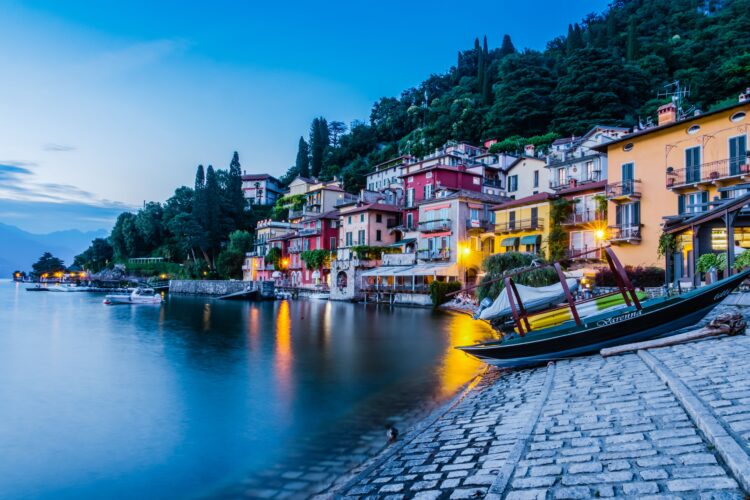
Lake Como has become almost shorthand for a certain kind of Italian luxury: grand 18th- and 19th-century villas turned into hotels, terraced gardens tumbling toward the water, and an atmosphere built around doing very little, very well. The lake’s hospitality scene continues to expand, with newer contemporary lake-resort properties joining the historic villa-hotels that made the destination famous, giving travelers a wider range of aesthetics than the classic grande dame experience alone.
Como rewards a slower pace than Rome or Venice. Most visitors split time between their hotel’s own gardens and pool, short boat trips to villages like Bellagio and Varenna, and long lunches at lakeside trattorias. It’s less about ticking off sights and more about the setting itself.
Book this if: You want romance and scenery without needing a beach, and you’re comfortable with a trip that has more downtime than sightseeing.
Timing: May–June and September offer warm days, blooming gardens, and noticeably thinner crowds than the height of summer.
The Amalfi Coast: Drama Built Into the Architecture
Where Como is about stillness, the Amalfi Coast is about spectacle. Towns like Positano, Ravello, and Amalfi cling to cliffs above the Tyrrhenian Sea, and the region’s hotels are built directly into that geography — infinity pools that seem to dissolve into the horizon, terraces cut into rock, and boat arrivals that are part of the experience rather than an afterthought.
Many of the coast’s top properties have been in the same families for generations, which shows in small details — a particular way of arranging breakfast on a private terrace, staff who remember returning guests by name — that larger hotel groups often struggle to replicate.
Book this if: You want dramatic coastal scenery paired with active exploration — hiking the Path of the Gods, boat-hopping to Capri, wandering through lemon groves — rather than a purely poolside trip.
Timing: June and September deliver warm sea temperatures with meaningfully fewer crowds than July and August, which are stunning but intensely busy and priced accordingly.
Florence and Tuscany: Renaissance Art Meets Wine Country
Florence anchors one of the most complete luxury combinations in Italy: a compact, walkable Renaissance city stacked with world-class art, paired with the surrounding Tuscan countryside — Chianti’s vineyards, hilltop towns like San Gimignano and Montepulciano, and a wave of newer countryside hotels converted from historic farmhouses and wine estates.
The typical high-end Tuscany trip splits time between a few nights in Florence itself (the Uffizi, the Duomo, world-class dining) and several more at a countryside property, where days revolve around wine tastings, cooking classes, and long, unhurried meals rather than a packed itinerary.
Book this if: You want art and architecture in the city, balanced by wine and countryside relaxation — arguably the most complete single-region Italian trip available.
Timing: May–June and September–October for the best combination of comfortable temperatures, vineyard scenery, and (in autumn) harvest season.
Sicily: Italy’s Most Underrated Luxury Circuit
Sicily has spent the past several years quietly building a genuinely serious luxury hospitality scene, expanding well beyond Taormina’s long-established grandeur into new corners of the island, including the southeastern Baroque towns around Noto and Ragusa. The island offers a different flavor of Italian luxury than the mainland — Greek and Roman ruins, volcanic landscapes around Mount Etna, and a cuisine shaped by centuries of Arab, Spanish, and Norman influence layered onto its Italian base.
Book this if: You want dramatic ancient history (Sicily has some of the best-preserved Greek temples outside Greece itself) combined with beach time and a culinary scene that’s genuinely distinct from mainland Italian food.
Timing: May–June and September–October avoid the island’s most intense summer heat while keeping the sea warm enough for swimming.
Milan: Design, Fashion, and a Sharper Hotel Edge
Milan doesn’t trade on ancient history the way Rome or Florence does — its appeal is different: cutting-edge design, world-class shopping, and a fine-dining and cocktail scene that continues to sharpen year over year. The city’s hotel landscape has grown considerably more serious in the past couple of years, with wellness-focused and design-forward openings adding real depth to what was previously a market defined mostly by fashion-week visitors.
Book this if: You want a shorter, design- and shopping-focused city break, ideally paired with a Lake Como extension (Milan’s airport is roughly an hour from the lake).
Timing: Spring (April–June) and early autumn (September–October) offer the most pleasant weather; note that hotel rates spike sharply during Milan Fashion Week and the Salone del Mobile design fair.
Capri: The Original Jet-Set Island
Capri has been synonymous with Italian glamour since the mid-20th century, and its luxury hotel scene continues to add genuinely exciting new addresses, including boutique properties opening in historic former private residences above Anacapri’s gardens. The island’s small scale — you can walk most of it — combined with dramatic cliffs, the Blue Grotto, and a legendary Piazzetta social scene gives it an outsized reputation relative to its size.
Book this if: You want a short, intensely scenic island escape, ideally as a two- or three-night addition to an Amalfi Coast or Naples-based trip rather than a standalone destination.
Timing: Late spring (May–June) and September for warm weather without Capri’s peak-August crowds, when day-tripper ferries can overwhelm the island’s small footprint.
A Practical Note on Planning an Italy Trip
Because Italy’s regions are so distinct, most high-end trips combine two or three of them rather than settling on just one. Some pairings work especially well:
- Rome + the Amalfi Coast: Culture and history followed by coastal relaxation, connected by a scenic drive or train through Naples.
- Florence + Tuscany + Lake Como: Art and wine country followed by lake-based stillness, all connected by fast train and a short transfer.
- Venice + Lake Como: Two of Italy’s most photogenic settings, connected by a roughly three-hour train journey.
- Milan + Lake Como: An efficient short-trip combination, given the lake’s proximity to Milan’s airports.
Italy’s high-speed rail network makes most of these combinations genuinely easy — often faster and more scenic than flying between regions — which is part of why multi-region itineraries have become the norm for longer luxury trips here rather than the exception.
Closing Thoughts
Italy’s advantage isn’t any single destination — it’s the range. A traveler chasing ancient ruins, a couple wanting quiet lakeside romance, a family drawn to dramatic coastal scenery, and a design enthusiast wanting Milan’s fashion-forward energy can all find exactly what they’re looking for within the same country, often within the same trip. With Venice, Milan, and Rome all in the middle of a significant hotel investment cycle right now, there are more genuinely new, exceptional properties to book across Italy than there have been in years.
The best approach is to start with what kind of experience you actually want — history, romance, coastline, wine, or design — rather than which region has the most name recognition, and to build the itinerary around that instinct. Italy is generous enough, and connected enough by rail, that it rarely punishes a traveler for wanting more than one thing from a single trip.
This article is for general informational purposes only. Hotel openings, availability, and travel conditions change frequently — always verify current details directly with the property or a licensed travel advisor before booking.